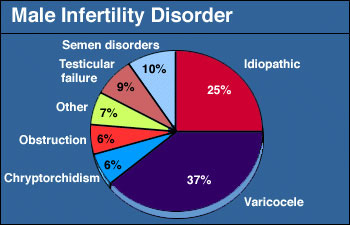
Inability to conceive in a woman can be due to male infertility also. Causes of male infertility are varied. Most commonly male infertility is due to low sperm count or poor motility and quality of the sperms. There are other factors also for male infertility such as hormonal imbalance, anatomical problem or genetic disorders. Any of these factors if present will lead to unsuccessful conception. Read on in detail about the causes of male infertility.Amongst the most common causes of
infertility in men are low sperm count and poor quality of their sperms or both together. There can also be a host of other causes behind male infertility comprising of hormonal imbalance, anatomical problem and genetic disorders. Each of the cases is briefly described below.
Abnormalities in the Sperm
There can be many reasons that cause sperm abnormality like:
- Result of certain diseases
- Congenital birth defect
- Risky exposure to certain chemicals
- Lifestyle factors
Abnormalities in the sperm are again characterized by whether the sperm shape, count or movement is affected. The major abnormalities are:
- Oligospermia – This refers to low sperm count which means that the man has below 20 million/ml. when the ejaculate is completely devoid of the presence of sperms, the condition is known as Azoospermia and is said to the reason behind 10-15% of male infertility cases.
- Asthenospermia – This refers to poor motility of the sperm, which means that the sperm lacks the ability to move. This can refer to very slow movement or moving in a jagged line. In both the cases, the sperm cannot invade the cervical mucous and therefore fail to penetrate the hard outer cover of the female egg. Poor motility can also pass on genetic disorders.
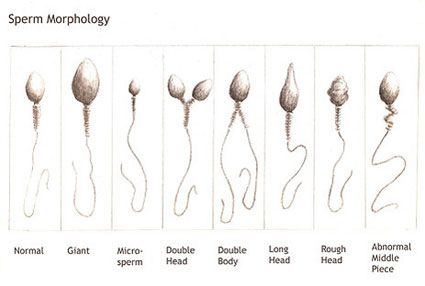
- Teratospermia – This refers to abnormal morphology of the sperm, which means the shape and structure. The egg cannot be fertilized by a sperm with an abnormal shape. Ideally it ought to have an oval head and long tail.
Retrograde Ejaculation
This is a condition brought about by the improper functioning of the bladder muscles. In such cases the sperm is rather forced in a backward motion into the bladder instead of a forward motion pushing it out of the urethra during orgasm. This also impairs the quality of the sperm.
Retrograde ejaculation is caused by –
- If the man has a surgery done to his prostrate or his lower bladder
- Diabetes and multiple sclerosis
- Injury or surgery in the spine
- Certain drugs used as tranquilizers, blood pressure medicines. Some variants of antipsychotics
- Advanced age
Structural Abnormalities
Structural abnormalities in the reproductive structure include damage or blockage of the testes or tubes. Some common infertility conditions under this category are –
- Cryptorchidism – This is noticed in newborns where the testicles do not fall from the abdomen into the scrotum.
- Hypospadias – This is also a birth defect where the urinary tract opens on the opposite side of the penis. It requires surgical correction otherwise the sperm will not reach the cervix.
- Blockage in the Tubes Carrying the Sperm – This is a birth defect where the ejaculatory ducts or epididymis is blocked. Some men may not even have the vas deferens that carries the sperm from the testicles to the penis.
Hormonal Problems
GnRH or gonadotropin hormone is responsible for signaling of the procedure that leads to release of major reproductive hormones like testosterone. When the GnRH is deficient, the condition is called Hypogonadism which negatively impacts healthy sperm production. This can be a birth defect or caused by genetic disorder where the pituitary gland that monitors the hormones gets affected. This can also happen due to radiation treatments or from tumors in the brain or pituitary gland.
Genetic Disorder
Male infertility can be caused by genetic factors like –
- Cystic Fibrosis – Here the vas deferens is either missing or is blocked
- Polycystic Kidney Disease – Cysts forms in the kidneys or other neighbouring organs or in the reproductive tract
- Klinefelter Syndrome – When two X and one Y chromosome instead of the usual one X and one Y, destroys the lining of the seminiferous tubules within the testicles during adolescence
- Kartagener Syndrome – Here sperm motility is impaired due to reverse positioning of the vital organs.