 Gudi Padwa is Maharashtra’s New Year day. It marks the beginning of spring season and there is more than one reason to celebrate. Celebration is incomplete without traditional dishes. Read on to learn about top 5 recipes for Gudi Padwa this year.
Gudi Padwa is the first day of Chaitra, which is the first month of Maharashtrian calendar. This festival falls mainly in the month of March every year. The day is auspicious and so people in Maharashtra buy ornaments, house and other valuable assets this day.
Gudi Padwa is the beginning of spring season as well as is celebrated because it is the time when one agricultural harvest ends and another is yet to start. With so many reasons for celebration, there are many traditional dishes made in Maharashtra on this special day of the year.
History of Gudi Padwa
It is believed that Lord Brahma created the world on this day. Second legend associated with the celebration of
Gudi Padwa is in the well-known epic, Ramayana. This is the day when Lord Rama killed King Vali before returning to Ayodhya. It is also believed that Lord Vishnu incarnated himself as Matsya on this day.
Significance of Gudi Padwa
On the auspicious day, one can find the Gudi hung outside the homes of Maharashtrians right from sunrise to sunset. It symbolises the victory of Maratha forces led by the great Maratha hero, Chhatrapati Shivaji Maharaj. People in Maharashtra believe that hanging the Gudi on the day of Gudi Padwa will invite good luck and prosperity in the house warding the evil off.
Recipes for Gudi Padwa
1. Puranpoli
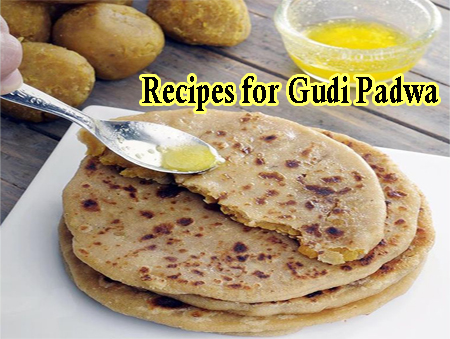
Puranpoli is a sweet Indian bread which is stuffed with a yummy mixture of jaggery and boiled and smashed lentils. A pinch of cardamom powder is added to the stuffing for the flavour. For a change you can make small puranpolis this time and serve with the thick creamy rabri. If you do not have much time you can make
puranpolis quickly by stuffing crumbled boondi laddoos. However, the recipe for making traditional puranpolis is given below.
Recipe for Making PuranpoliIngredients:- Chana dal – 1 cup
- Sugar – 1 cup
- Maida (fine flour) – 1 1/2 cups
- Cardamom pods – 2 – 3
- Oil or ghee – 8 table spoon
- Saffron powder – 1 pinch
- Turmeric powder – 1 tea spoon
Preparation:- Add saffron powder in 1/2 cup of water.
- Sieve maida and add the saffron water to it.
- Add a little bit of oil and knead the dough to make it soft.
- Set aside the dough for 1 – 2 hours.
- Wash chana dal in a separate bowl and add water to boil it.
- Make sure the chana dal becomes soft and it is not overcooked.
- Pour out the extra water and add sugar to it.
- Without adding water, grind this mixture.
- Add cardamom in the last round and grind.
- Now make small size round purans from it and keep in a plate.
- Take the dough and cut slightly bigger round sized pellets from it.
- Take one pellet and dust it with dry maida so that you make small puri.
- Now stuff the puran and enclose the puri by folding the edges of the round puri.
- Now role the Puran puri to make it flat and little bigger than the size of a puri.
- Heat the tawa and roast puris on low flame adding ghee.
- Serve the hot puranpolis with ghee or milk.
2. Shrikhand
Shrikhand is the sweet served on the occasion of Gudi Padwa to ensure that the year ahead is full of sweet things. It is very easy to make and you can prepare a wide range of different flavoured shirkhands and store in your refrigerator. In addition to traditional kesari
shrikhand, you can make fruit shrikhand, shrikhand with strewed apricots, chocolate shrikhand, biscuit shrikhand and many more.
Recipe for Making ShrikhandIngredients:- Plain yogurt – 2 1/2 cups
- Warm milk – 1 table spoon
- Saffron – 1 pinch
- Cardamom powder – 1/4 tea spoon
- Sugar – 1/2 cup
- Finely chopped dry fruits – 2 table spoon
Preparation:- Hang the yogurt in a muslin cloth for 4 – 5 hours.
- Soak saffron in warm milk for 20 – 30 minutes.
- Whisk the drained yogurt and add soaked saffron, sugar and cardamom powder to make a soft and creamy mixture.
- Put in a bowl and set aside to get chilled. Garnish with chopped nuts and serve.
3. Kesari Bhaat
This is another sweet preparation for the meal on the auspicious day of Gudi Padwa. It’s bright colour and aroma makes you crave for the first spoon and after that you cannot resist the temptation.
Recipe for Making Kesari BhaatIngredients:- Basmati rice – 1 cup
- Ghee – 2 table spoon
- Saffron – 1 pinch
- Dry fruits – finely chopped
- Water – 2 cups
Preparation:- Wash the rice and drain the water. Spread it on a plate so that it gets slightly dry.
- Fry the rice in ghee for 2 – 3 minutes
- Add sugar and water to it
- Cook the rice till done
- Add saffron soaked in water and dry fruits and mix thoroughly.
- Cover the utensil and serve after 5 minutes
4. Sonth Panak
This is another sweet made especially on the occasion of Gudi Padwa.
Recipe for Making Soonth PanakIngredients:- Grounded peppercorns – 8
- Jaggery – 1 cup
- Dry ginger powder – 1 tea spoon
- Cardamom powder – 1/2 tea spoon
Preparation- Take 6 cups of cold water and melt jaggery in it.
- Add other ingredients and stir
- Refrigerate
- Serve chilled.
5. Rice Chakli
With so many sweet items, there has to be one salty item too. Rice chaklis are crisp and very tasty snacks which can be stored for few days also.
Recipe for Making Rice ChakliIngredients:- Rice flour – 3 cups
- Gram flour – 1 1/2 cups
- Til seeds – 1 table spoon
- Asafoetida – 2 pinch
- Ghee – 2 table spoon
- Chilli powder – 3 table spoon
- Salt according to the taste
- Oil to fry
Preparation:- Wash the til seeds
- Add all the ingredients accept the oil and mix well
- Add water and make a soft dough
- Put the dough in the mold and make chaklis and spread them on cellophane paper
- Heat oil in a round bottomed pan
- Add chaklis one by one to the oil and deep fry them
- Drain the oil while you remove the chaklis
- Spread them on butter paper
- Serve in a plate after few minutes with tea or coffee.
Above are some easy to prepare traditional recipes which are definitely going to delight your taste buds and double the joy of
celebrating Gudi Padwa this year.
Which food items are prepared on the occasion of Gudi Padwa? Why are sweets served on the occasion of Gudi Padwa? Which Maharashtrian sweets are prepared on the occasion of Gudi Padwa? Discuss here.