TheGaneshafestivaliscelebratedonthefourthdayofthemonthofBhadrapadintheHinducalendar.AccordingtotheGregoriancalendar,thisfallsbetweenthemonthsofAugustandSeptember.ClayidolsofLordGaneshaarelovinglybroughthomeandworshippedwithgreatdevotion.HeispropitiatedwithgreatreverenceparticularlyinthestateofMaharashtra.ItwasLokmanyaTilakwhorealizedthatcommunitycelebrationofreligiousfestivalswouldbringpeopletogether.HeintroducedthetraditionofcelebratingtheGaneshafestivalinMaharashtraonsuchagrandscale.LordGaneshaisthesonofLordShiva.HeisconsideredthemostauspiciousGodtoworshipatthecommencementofanyoccasion.Heisconsideredtobetheremoverofallobstaclesandhindrancesthatmayariseinanyworkundertaken.Therefore,itisawell-knowncustomtopayobeisancetohimbeforeoneundertakesanytask.ThatisthereasononefindsLordGaneshasimageadorningmostweddinginvitations.LordGaneshaisconsideredtobeamostbenevolentGodandoneofthemostpopular.Hehastheheadofanelephant,ananimalofgreatstaminaandintelligence.Thus,heistheLordofgreatstrengthandintellect.Heisalsoconsideredthemasterofallacademicsubjectsaswellasalltheartsandcrafts.Heisusuallydepictedwithfourhands:oneholdsamodak,anotheralotusflower,athirdanaxeandthefourth,atrishul.Thereisthegreatshloka:Vakratundamahakayasuryakotisamaprabha.NirvighnamakurumedevashubhakaryeshusarvadaWhentranslatedintoEnglish,itreadsas:"OmightyGodwithatrunk,yourbrillianceislikethatofathousandsuns;freemypathofallobstaclesinallauspiciousworksthatIundertake."GaneshChaturthibeingacommunityaffair,onewillfindpeoplegoingfromdoor-to-doortocollectmoneyfortheGaneshafestivities.Thismoneygoestowardsthemakingoftheidol,themaintenanceofthepandalandtheexpensesofthepriestandthedailypuja.ThepeoplegatheraroundchantingSanskritshlokaswhentheidolisinstalled.Artiisdonetwiceadayafterthat.Aspecialsweetismadeeveryday.Somepeopleobserveafastonthefirstday,butitisnothardtokeep.Tilandgur(jaggery),isallowedtobetakenintheformofgajak,revriortilkeladdooandtheycandrinktea,coffeeandwaterthroughtheday.Thepeopleofferprasadofmodaksorpedas,aredflowerlikethehibiscus,abundleofatleastthreesheavesofgrass,kumkum,haldiandrice.Ganeshpujacanalsobedoneathome.Theareawheretheidolisgoingtobeplacedwillbethoroughlycleaned.Thefloorwillbedecoratedwithrangoliandagarlandofredflowerswillbeplacedaroundtheneckoftheidol.Theheadofthefamilywillperformthepujaafterbathingandwearingcleanclothes.Allmembersofthefamilydotheartiinturn.ThefestivitiescometoanendonAnandChaudas,whenboththecommunityidolsandtheidolsfrompeopleshomesaretakentotheseaornearestriverorlakeforvisarjanorimmersion.Householdidolscanbeimmersedafteroneandahalf,sevenortendaysafterinstallation.InMumbai,massiveprocessionsaretakenoutwithpeopledancingonthestreetsshoutingGanpatiBappaMaurya,PudchyaVarshaLuvkarya!
The Ganesha festival is celebrated on the fourth day of the month of Bhadrapad in the Hindu calendar. According to the Gregorian calendar, this falls between the months of August and September. Clay idols of Lord Ganesha are lovingly brought home and worshipped with great devotion. He is propitiated with great reverence particularly in the state of Maharashtra. It was Lokmanya Tilak who realized that community celebration of religious festivals would bring people together. He introduced the tradition of celebrating the Ganesha festival in Maharashtra on such a grand scale.
Lord Ganesha is the son of Lord Shiva. He is considered the most
auspicious God to worship at the commencement of any occasion. He is considered to be the remover of all obstacles and hindrances that may arise in any work undertaken. Therefore, it is a well-known custom to pay obeisance to him before one undertakes any task. That is the reason one finds Lord Ganesha's image adorning most
wedding invitations.
Lord Ganesha is considered to be a most benevolent God and one of the most popular. He has the head of an elephant, an animal of great stamina and intelligence. Thus, he is the Lord of great strength and intellect. He is also considered the master of all academic subjects as well as all the
arts and crafts. He is usually depicted with four hands: one holds a modak, another a lotus flower, a third an axe and the fourth, a trishul.
There is the great shloka:
Vakratunda mahakaya suryakoti samaprabha.
Nirvighnama kurumedeva shubhakaryeshu sarvada
When translated into English, it reads as:
"O mighty God with a trunk, your brilliance is like that of a thousand suns; free my path of all obstacles in all auspicious works that I undertake."
Ganesh Chaturthi being a community affair, one will find people going from door-to-door to collect money for the Ganesha festivities. This money goes towards the making of the idol, the maintenance of the pandal and the expenses of the priest and the daily
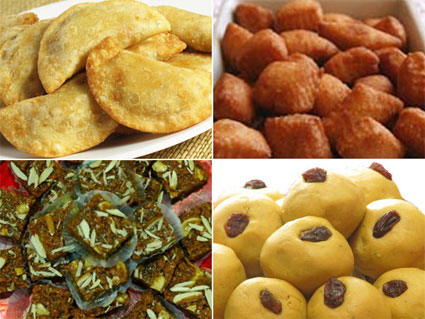
puja. The people gather around chanting Sanskrit shlokas when the idol is installed. Arti is done twice a day after that. A special sweet is made every day. Some people observe a fast on the first day, but it is not hard to keep. Til and gur (jaggery), is allowed to be taken in the form of gajak, revri or til ke laddoo and they can drink tea, coffee and water through the day. The people offer prasad of modaks or pedas, a red flower like the hibiscus, a bundle of at least three sheaves of grass, kumkum, haldi and rice.
Ganesh puja can also be done at home. The area where the idol is going to be placed will be thoroughly cleaned. The floor will be
decorated with rangoli and a garland of red flowers will be placed around the neck of the idol. The head of the family will perform the puja after bathing and wearing clean clothes. All members of the family do the arti in turn.
The festivities come to an end on Anand Chaudas, when both the community idols and the idols from people's homes are taken to the sea or nearest river or lake for visarjan or immersion. Household idols can be immersed after one and a half, seven or ten days after installation. In Mumbai, massive processions are taken out with people dancing on the streets shouting 'Ganpati Bappa Maurya, Pudchya Varsha Luvkarya!'