Imagine undulating hills surrounded by enchanting forests—where the cool breeze rustling through leafy glades caresses your skin and the ripple of forest streams forms a backdrop to the awesome silence around. This is Pachmarhi, the queen of the Satpudas. Geographically, Pachmarhi is a saucer-shaped valley nestled amidst the densely forested Satpuda Hills in Madhya Pradesh. It lies about 210 kilometres from Bhopal, the capital of Madhya Pradesh. Set at an altitude of 3,555 feet, the region enjoys a pleasant and equable climate all through the year. Pachmarhi was discovered in 1857, by Captain James Forsyth of the Bengal Lancers. He was so struck by the beauty of this land that he was instrumental in having it developed as a sanatorium. Ancient sal and bamboo forests, and shady trails winding through jamun and mahua groves, crisscrossed by gurgling forest streams, give Pachmarhi its exceptional verdant charm. Pachmarhis greatest appeal lies in the fact that it is yet untouched by the frenzy of over-development and commercialisation that plagues many other hill stations and places of natural beauty in India. It provides visitors a splendid opportunity for exploring peace and solitude. In this articleAttractionsScenic viewsSacred spacesWildlifeCave sheltersTribal lifeHow to ReachWhere to Stay Attractions While an abundance of forest trails makes this hill station a hikers paradise, nature lovers can revel in the incredible flora and fauna found in the region. And there is history in the form of old temples, rock cave shelters with prehistoric paintings, and the more recent churches and mansions that constitute a nostalgic relict of the British Raj. These are some of the attractions in Pachmarhi: Scenic views Dhoopgarh: This highest point in the Satpuda range, commands a panoramic view with stunning sunsets. Priyadarshini: This point provides a stunning view of the valley. It is also known as Forsyth Point in memory of Captain Forsyth who got his first glimpse of Pachmarhi from here. Handi Khoh: A 300-feet high precipice with steep rocky sides makes this ravine quite spectacular. Jamuna Prapat: The waterfall and the stream constitute a scenic location. Pools of water at the source of the fall are used for swimming and bathing. Irene Pool: This forest stream, flowing upstream, enters a rocky cave where it goes underground, before emerging again to form some beautiful waterfalls. Jalawataran: Also known as Duchess Falls, visitors can descend a 4-km trek to its base. Reechhgarh: This natural rock formation makes an amphitheatre with an entrance passage through a cave on its southern slope. Sacred spaces Mahadeo Hill: With a Shiva temple housing an imposing Shivalinga, this hill is sacred to the locals. There are caves with paintings on the eastern slope of this hill. Jata Shankar: This is a holy cave inside a stony hillock from which a stream called Jambu Dwip emerges. Patterns in the rocks resembling the hair locks of Lord Shiva give this place its name. Pandav Caves: This set of five caves shelters are ascribed by legend to have been used by the Pandavas. Catholic Church: Built in 1892, this church boasts good examples of French and Irish architectural styles. An old derelict graveyard provides an evocative backdrop to the church. Christ Church: This church, dating back 1875, is a striking architectural wonder. With its stained glass windows and old bell, it is an interesting relic of the past. Wildlife Satpuda National Park: The stunning natural terrain in this national park, located close to Pachmarhi, comprises hills, ravines, waterfalls, and the expansive Tawa reservoir. Lucky visitors may catch a glimpse into some of the local fauna such as the tiger, leopard, sloth bear, gaur, chowsingha or the four-horned antelope, and the neelgai, along with a good number of bird species. Bison Lodge: This is an interesting old structure housing a museum that showcases the flora and fauna of the Satpudas. Cave shelters Dhuandhar: Containing paintings of archers with bows and arrows, these are some of the most interesting caves in Pachmarhi. Jambu Dwip Valley: This set of six caves on the northern face of Jambu Dwip valley has beautiful human and animal paintings. Harpers Cave: This cave includes a beautiful painting of a man playing a harp. Chieftains Cave: A painting in this cave portrays a battle scene between two chieftains. Kites Crag: The caves along the South and East faces of Kites Crag have some interesting paintings done predominantly in white, or having red outlines. Tribal life The indigenous tribal people of Madhya Pradesh, including the Gonds and the Korkus are another reason to visit Pachmarhi. Their joy and laughter is infectious as they celebrate life by singing, dancing, and drinking the local brew made from fermented mahua flowers. A peep into their unique ethnic culture provides interesting nuggets of information on their animistic beliefs, resourceful habits, and enigmatic folklore. How to Reach Pachmarhi can be reached by train from the nearest railhead, Pipariya (about 47 kilometres). It can also be reached by air from the nearest airport, Bhopal (about 210 kilometres). Where to Stay Pachmarhi has accommodations to suit most tastes and budgets. You can opt for bungalows, holiday homes, cottages, or budget rooms. However, as the number of hotels is somewhat limited, advance booking is recommended.
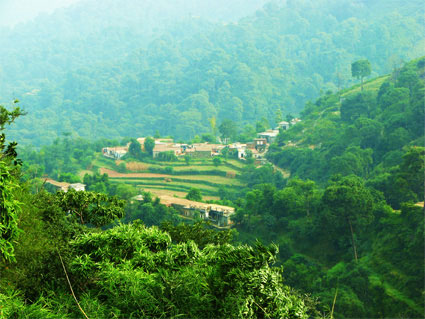
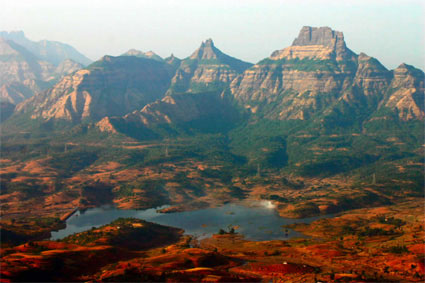
Imagine undulating hills surrounded by enchanting forests—where the cool breeze rustling through leafy glades caresses your skin and the ripple of forest streams forms a backdrop to the awesome silence around. This is Pachmarhi, the queen of the Satpudas. Geographically, Pachmarhi is a saucer-shaped valley nestled amidst the densely forested Satpuda Hills in Madhya Pradesh. It lies about 210 kilometres from Bhopal, the capital of Madhya Pradesh. Set at an altitude of 3,555 feet, the region enjoys a pleasant and equable climate all through the year. Pachmarhi was discovered in 1857, by Captain James Forsyth of the Bengal Lancers. He was so struck by the beauty of this land that he was instrumental in having it developed as a sanatorium. Ancient sal and bamboo forests, and shady trails winding through jamun and mahua groves, crisscrossed by gurgling forest streams, give Pachmarhi its exceptional verdant charm. Pachmarhi's greatest appeal lies in the fact that it is yet untouched by the frenzy of over-development and commercialisation that plagues many other hill stations and places of natural beauty in India. It provides visitors a splendid opportunity for exploring peace and solitude.
While an abundance of forest trails makes this hill station a hiker's paradise, nature lovers can revel in the incredible flora and fauna found in the region. And there is history in the form of old temples, rock cave shelters with prehistoric paintings, and the more recent churches and mansions that constitute a nostalgic relict of the British Raj. These are some of the attractions in Pachmarhi:
Scenic views
Dhoopgarh: This highest point in the Satpuda range, commands a panoramic view with stunning sunsets.
Priyadarshini: This point provides a stunning view of the valley. It is also known as Forsyth Point in memory of Captain Forsyth who got his first glimpse of Pachmarhi from here.
Handi Khoh: A 300-feet high precipice with steep rocky sides makes this ravine quite spectacular.
Jamuna Prapat: The waterfall and the stream constitute a scenic location. Pools of water at the source of the fall are used for swimming and bathing.
Irene Pool: This forest stream, flowing upstream, enters a rocky cave where it goes underground, before emerging again to form some beautiful waterfalls.
Jalawataran: Also known as Duchess Falls, visitors can descend a 4-km trek to its base.
Reechhgarh: This natural rock formation makes an amphitheatre with an entrance passage through a cave on its southern slope.
Sacred spaces
Mahadeo Hill: With a Shiva temple housing an imposing Shivalinga, this hill is sacred to the locals. There are caves with paintings on the eastern slope of this hill.
Jata Shankar: This is a holy cave inside a stony hillock from which a stream called Jambu Dwip emerges. Patterns in the rocks resembling the hair locks of Lord Shiva give this place its name.
Pandav Caves: This set of five caves shelters are ascribed by legend to have been used by the Pandavas.
Catholic Church: Built in 1892, this church boasts good examples of French and Irish architectural styles. An old derelict graveyard provides an evocative backdrop to the church.
Christ Church: This church, dating back 1875, is a striking architectural wonder. With its stained glass windows and old bell, it is an interesting relic of the past.
Wildlife
Satpuda National Park: The stunning natural terrain in this national park, located close to Pachmarhi, comprises hills, ravines, waterfalls, and the expansive Tawa reservoir. Lucky visitors may catch a glimpse into some of the local fauna such as the tiger, leopard, sloth bear, gaur, chowsingha or the four-horned antelope, and the neelgai, along with a good number of bird species.
Bison Lodge: This is an interesting old structure housing a museum that showcases the flora and fauna of the Satpudas.
Cave shelters
Dhuandhar: Containing paintings of archers with bows and arrows, these are some of the most interesting caves in Pachmarhi.
Jambu Dwip Valley: This set of six caves on the northern face of Jambu Dwip valley has beautiful human and animal paintings.
Harper's Cave: This cave includes a beautiful painting of a man playing a harp.
Chieftain's Cave: A painting in this cave portrays a battle scene between two chieftains.
Kites Crag: The caves along the South and East faces of Kites Crag have some interesting paintings done predominantly in white, or having red outlines.
Tribal life
The indigenous tribal people of Madhya Pradesh, including the Gonds and the Korkus are another reason to visit Pachmarhi. Their joy and laughter is infectious as they celebrate life by singing, dancing, and drinking the local brew made from fermented mahua flowers. A peep into their unique ethnic culture provides interesting nuggets of information on their animistic beliefs, resourceful habits, and enigmatic folklore.
How to Reach
Pachmarhi can be reached by train from the nearest railhead, Pipariya (about 47 kilometres). It can also be reached by air from the nearest airport, Bhopal (about 210 kilometres).
Where to Stay
Pachmarhi has accommodations to suit most tastes and budgets. You can opt for bungalows, holiday homes, cottages, or budget rooms. However, as the number of hotels is somewhat limited, advance booking is recommended.
Sorry. Due to our site's regulations and policies, your message has not been posted. Our moderating team has been notified about your message. If the message is found to be genuine and still did not get posted, you may not post the message again as it will automatically get posted for you within 24hrs time (excluding weekends).
- The Indiaparenting Team
Do you crave to get away from the city? Do you wish to connect with nature? Do you love to travel to lesser known destinations? Have you ever been to Pachmarhi? What was it like?
Suresh
The rich history of India, accompanied by its cultural and physical diversity makes it a major tourism destination. It is very difficult to point out top 10 destinations but I would include Jammu and ...
These destinations given below are a must-go-to! Most of them are historical places where you can learn a lot from.Taj Mahal in Agra, Goa, Kerela, Himachal Pradesh, Ajanta Caves, Varanasi, Kashmir and...
Chennai, the capital of Tamil Nadu, is known as the gateway to south India.The city´ s main attractions are its beach, temples, museums and galleries, old Portuguese style churches, and amusement...